Planning sound for a conference
Clear speech matters more than loud sound. A practical checklist for microphones, speakers, the sound desk and the stream.
22 Nov 2026 · 5 min read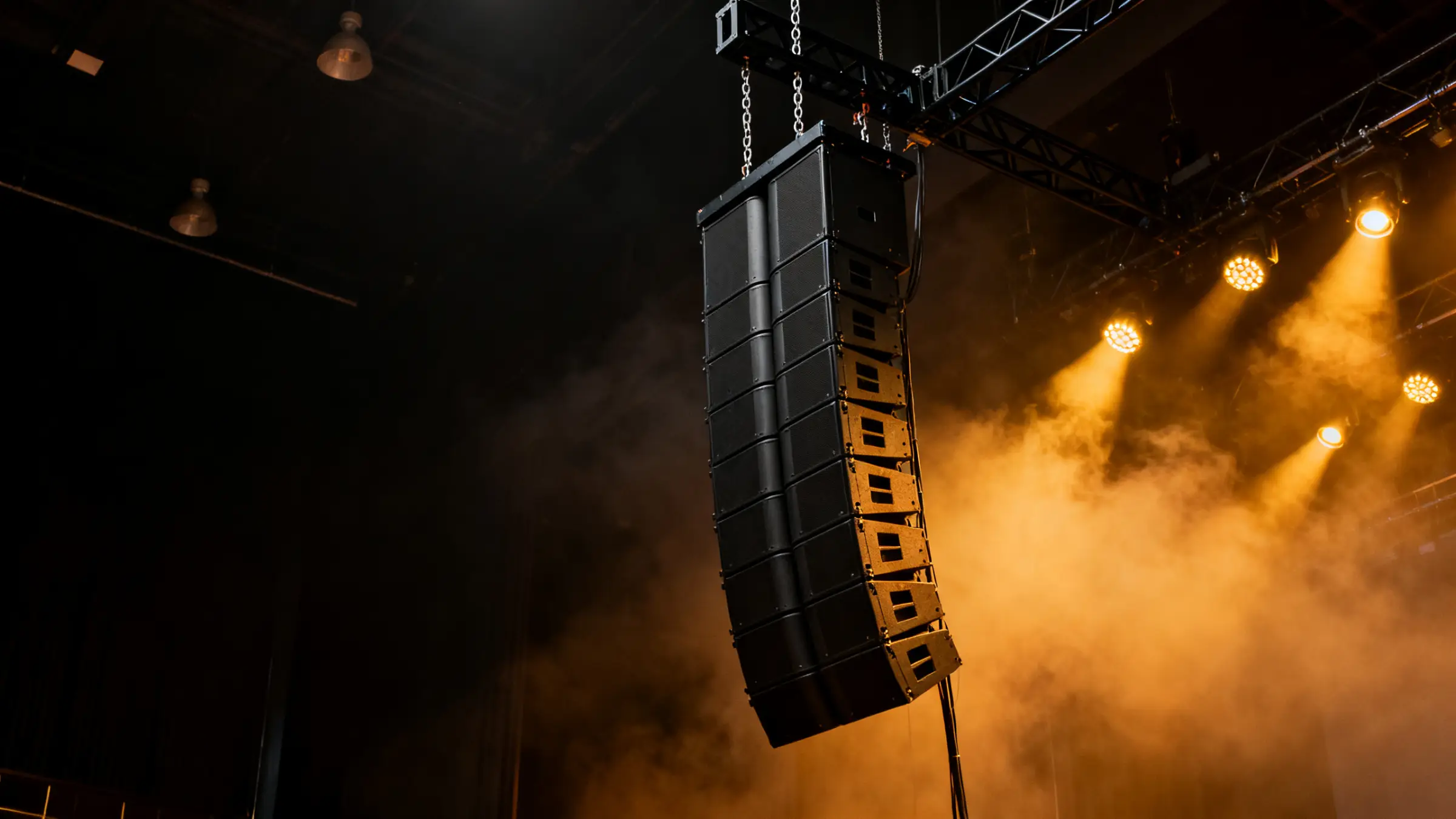
At a conference, sound has one job: every word, from every speaker, must reach every seat clearly. Music and effects come second. Here is how to plan it.
Count the voices
Write down everyone who will speak: the host, each speaker, the panel, the people asking questions from the floor. Each of them needs a microphone at the right moment.
- A speaker at the podium: a lectern microphone.
- A speaker who walks the stage: a headset or lapel microphone, so their hands are free and their voice stays steady.
- A panel at a table: a microphone for each person, or one handheld passed along.
- Questions from the audience: one or two handheld microphones carried by the crew.
Clear before loud
A hall with hard walls, glass and a high ceiling echoes, and turning the sound up makes the echo worse. Speakers aimed at the seats, not at the walls, make speech clear without making it loud. In a long hall, extra speakers further back help the last rows hear without blasting the front.
The engineer at the desk
Someone must sit at the sound desk for the whole event: opening each microphone when its speaker starts, closing it when they finish, and keeping the level steady when a quiet speaker follows a loud one. Make sure the engineer has the programme and the list of speakers.
Monitors for the stage
Speakers and panel members need to hear the room and each other, especially when a remote speaker joins on the screen. Small stage monitors make this possible.
Streaming, recording and interpretation
If the conference will be streamed or recorded, the sound desk should send a clean feed to the cameras; a microphone in front of a loudspeaker sounds poor. If there will be simultaneous interpretation, tell the supplier early: it needs its own equipment for the interpreters and receivers for the guests.
Test before the doors open
Plan a line check of every microphone in the real hall before the guests arrive, and ask speakers with slides or videos to rehearse on the real stage. Keep spare batteries for the wireless microphones at the desk.
A short checklist
- A list of every speaker and how they will speak.
- Microphones for the podium, the panel and the audience.
- Speakers placed for the room, with extra ones for long halls.
- An engineer at the desk for the whole event.
- A clean feed for the stream and the recording.
- A line check and a rehearsal before the doors open.
Planning a conference? Send us the date, the hall and the number of speakers from the quote page and we will plan the sound with you.